

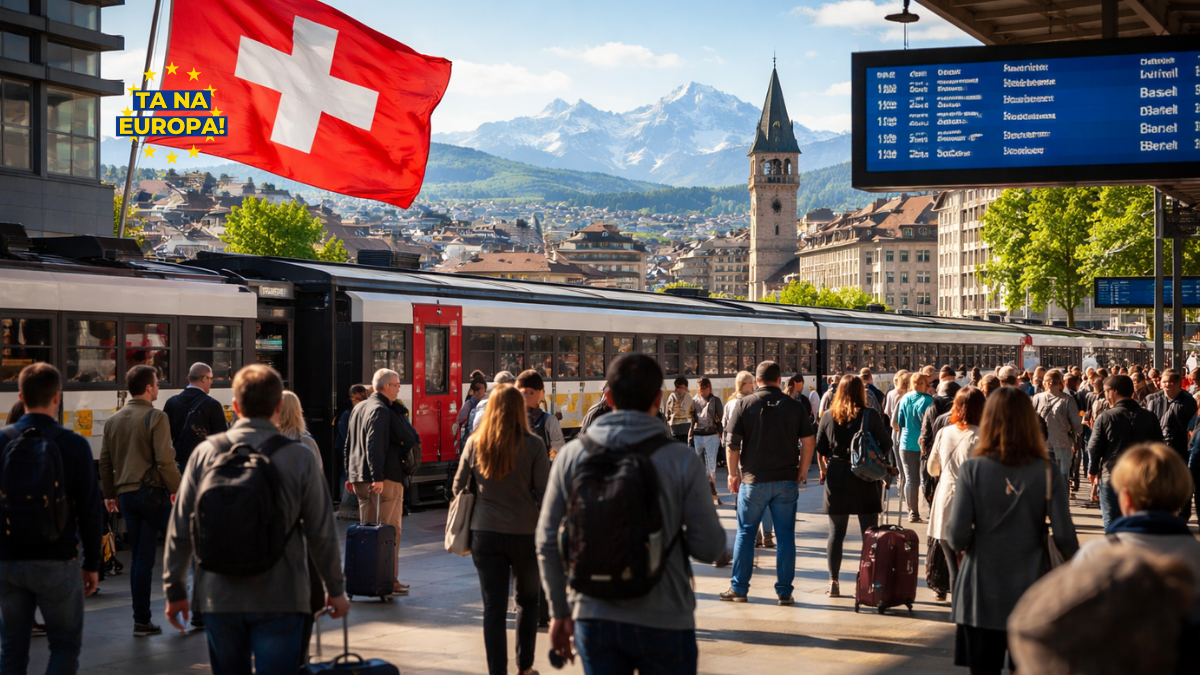
Switzerland will vote in June 2026 on a proposal to limit its population to 10 million people. At first glance, it may look like just a number written on paper. But behind this vote there are economic risks, migration rules, international agreements and real consequences that can affect workers, businesses and even other European countries. This is not just a local debate. It is a decision that can shape the direction of one of Europe’s strongest economies.
Switzerland is known for stability, high salaries, strong infrastructure and a high quality of life. Many people around the world see it as a model country. So why would a country like this want to limit its own growth? What are the real fears behind this proposal? And what could actually change if this measure is approved by voters?
Let’s slow down and understand the full picture step by step.
Why Switzerland Is Voting on a Population Limit Now
The proposal was launched by the Swiss People’s Party and gathered enough signatures to trigger a national referendum under Switzerland’s direct democracy system. The referendum is scheduled for June 14, 2026, according to official Swiss federal communications and major European media outlets.
The mechanism is clear. If the population reaches 9.5 million, the federal government would be required to take action to slow growth. If it reaches 10 million, stronger measures could follow, including the renegotiation of international agreements that contribute to population increase, and only if negotiations fail could cancellation become a last resort measure.
Switzerland currently has around 9.1 million residents. Almost 30 percent of them were born abroad, one of the highest shares in Europe. Over the last decades, migration has played a major role in the country’s economic expansion.
Supporters of the cap argue that this growth is no longer sustainable. They mention housing shortages in major cities like Zurich and Geneva. They point to crowded trains during peak hours. They talk about environmental pressure and infrastructure limits. According to them, if nothing changes, the system may become overloaded in the long term.
https://tanaeuropa.com/custo-de-vida-na-europa-o-que-esperar-entre-diferentes-paises/
Critics respond with a different argument. They say Switzerland’s prosperity is directly connected to openness and labor mobility. They believe that limiting population growth through strict migration control could harm the economy more than protect it.
What Changes If the Population Cap Is Approved
If voters approve the measure, Switzerland would need to adopt stricter migration policies to ensure the limit is respected.
https://tanaeuropa.com/trabalhar-na-europa-como-estrangeiro-regras-vistos-e-oportunidades/
This could mean:
- Tighter work permit quotas for non Swiss nationals
- Stricter asylum procedures
- Reduced possibilities for family reunification
- Renegotiation of the free movement agreement with the European Union
Switzerland is not a member of the European Union, but it maintains bilateral agreements with the EU. One of the most important is the free movement of people agreement, which allows EU citizens to live and work in Switzerland with fewer restrictions compared to other non EU nationals.

If the population cap forces Switzerland to limit EU migration, the country may have to renegotiate parts of this agreement, and only if negotiations fail could cancellation become a last resort measure.
For companies in sectors like healthcare, engineering, construction and finance, foreign professionals are essential. If hiring becomes more complicated, businesses may face delays in projects, increased wage pressure and rising operational costs. When costs rise, they usually affect consumers and taxpayers as well.
https://tanaeuropa.com/como-estrangeiros-sao-tributados-na-europa-regras-renda-e-obrigacoes/
Who Is Most Affected by This Proposal
Foreign workers are clearly among the most affected groups.
Switzerland depends heavily on skilled professionals from neighboring countries such as Germany, France and Italy. Many doctors in Swiss hospitals were trained abroad. Many engineers in major infrastructure projects are foreign nationals. The financial and technology sectors also rely on international talent.
If migration flows are reduced significantly, companies may struggle to fill open positions. Labor shortages can lead to slower economic growth. For businesses, this can mean higher recruitment costs and possible relocation of operations. For the government, slower growth can translate into lower tax revenue.
For local residents, the situation is complex. Some may experience less pressure on housing markets if demand slows down. Rental prices might stabilize in certain regions. However, if economic growth slows, job opportunities and wage growth could also be affected.
Economic Impact and the Bigger European Context
Switzerland has one of the highest GDP per capita levels in Europe. It is deeply integrated into European markets despite not being an EU member.
The country exports pharmaceuticals, machinery, financial services and luxury goods. Its companies operate across borders. If agreements with the EU are affected, trade relations could become more complex.
Investors prefer stability. When constitutional changes create uncertainty about future labor access and market agreements, investment decisions may slow down.
There is also a demographic factor. Like many European countries, Switzerland faces an aging population. Life expectancy is high and birth rates are relatively low. A strong workforce is necessary to support retirees and public systems.
If migration slows significantly, the working age population may not grow fast enough to balance demographic aging. This is why many economists argue that controlled migration is connected to long term fiscal sustainability.
What Polls Say About the Referendum
Recent opinion polls suggest that Swiss voters are divided. Support for the proposal has been reported close to 48 percent, with a significant portion of voters still undecided. This makes the final result uncertain.
Switzerland has a history of close referendums. In 2014, a similar initiative related to immigration passed with a narrow margin, leading to negotiations with the European Union. This precedent adds tension to the 2026 vote.
Business associations and many federal representatives have expressed concerns about the potential economic damage if the cap is approved. Supporters frame the proposal as a matter of sovereignty and democratic control.
What This Means for Expats and Future Migrants
If you are considering moving to Switzerland for work, this referendum is important.
https://tanaeuropa.com/morar-na-europa-custos-documentos-e-o-que-realmente-muda/
A population cap could mean:
- More competitive and limited visa allocations
- Longer administrative processing times
- Stricter compliance requirements for employers
- Possible adjustments in minimum salary thresholds for foreign workers
Switzerland remains attractive because of high wages and strong public services. However, migration policies may become more selective.
For European citizens benefiting from free movement rules, the referendum could introduce uncertainty regarding mobility and employment rights.
https://tanaeuropa.com/tipos-de-visto-para-morar-na-irlanda-qual-escolher-em-cada-situacao/
Possible Future Scenarios
If the referendum fails, Switzerland continues with its current migration framework. Economic stability remains and bilateral agreements stay intact.

If the referendum passes, Switzerland will need to implement measures to ensure compliance with the constitutional limit. This may involve negotiations with European partners and adjustments to domestic migration laws. Companies may adapt their hiring strategies and some sectors may invest more in automation.
None of these changes would happen overnight, but over time the structural effects could reshape the Swiss labor market and economic outlook.
Conclusion of Ta Na Europa!
From the outside, a population cap may sound like a simple political idea. But when we look deeper, we see economic risks, migration implications and international consequences.
Switzerland is deciding between tighter demographic control and continued economic openness. The result will influence workers, businesses and possibly the broader European labor market.
In 2026, this is one of the most important demographic debates in Europe.
References
Switzerland to vote on plan to cap population at 10m – Irish Times
https://www.irishtimes.com/world/europe/2026/02/11/switzerland-to-vote-on-plan-to-cap-population-at-10m/
Switzerland to vote on proposal to cap population at 10 million by 2050 – Euronews
https://www.euronews.com/2026/02/12/switzerland-to-vote-on-proposal-to-cap-population-at-10-million-by-2050
Swiss voters to decide on population cap and civilian service reform on Sunday June 14 – SWI swissinfo.ch
https://www.swissinfo.ch/eng/swiss-politics/swiss-voters-to-decide-on-population-cap-and-civilian-service-reform/90927378
