

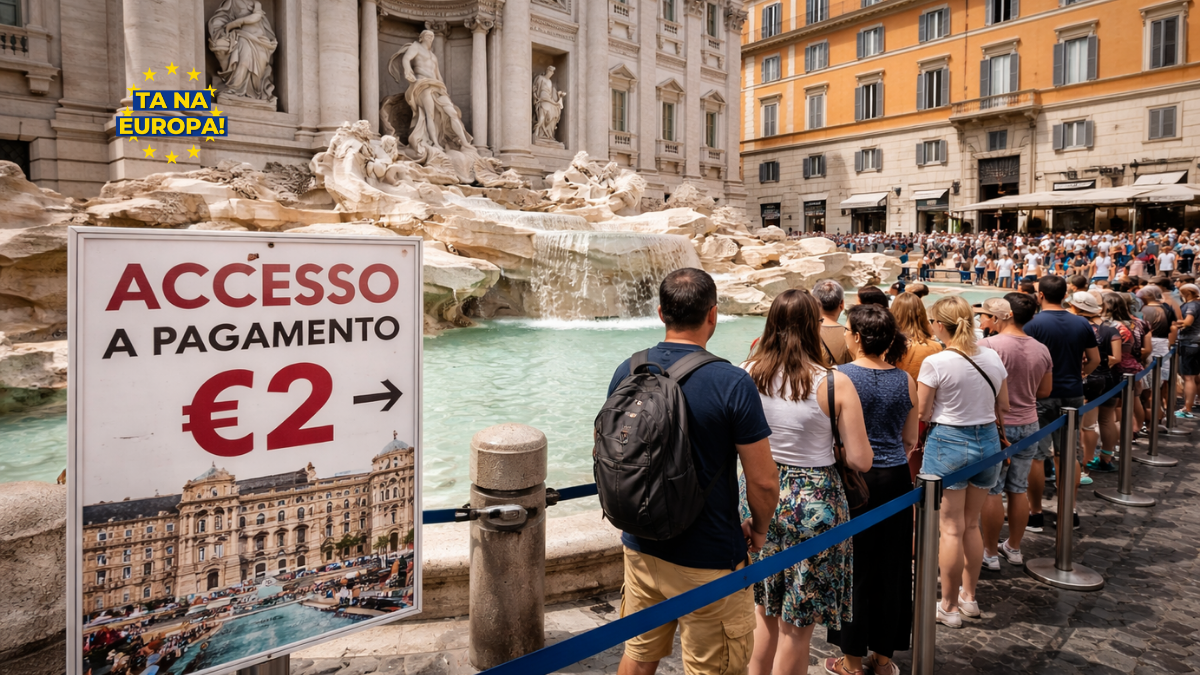
Rome introduced a 2 euro ticket for visitors who want close access to the Trevi Fountain basin on 2 February 2026. What looks like a small fee is part of a bigger change in how European cities manage tourism, public space, and cultural heritage. In this article, I explain what is happening, who is affected, how it impacts travel plans, and what this means for the future of tourism in Europe.
I live in Ireland but I am originally from Sao Paulo. I am not a native English speaker, and I prefer to explain things in a simple and direct way. When I saw this news, I realized it is not just about 2 euro. It is about rules, costs, crowd control, and how cities are adapting to mass tourism. If you are planning to visit Italy, or if you are thinking about living or studying in Europe, this change matters more than it seems at first glance.
Why Rome Introduced the 2 Euro Access Fee
Rome receives millions of visitors every year. The Trevi Fountain is one of the most famous landmarks in the city. The tradition of throwing a coin into the fountain is known all over the world. Many people believe that if you throw a coin, you will return to Rome one day. Because of this tradition, the area is always crowded.
The city government introduced a controlled access system to reduce overcrowding at the lower platform, the area closest to the water. The main square remains free. Anyone can still see the fountain without paying. However, if you want to go down to the basin level and toss a coin from the traditional spot, you need to buy a ticket during regulated hours, which currently run from 11:30 to 22:00 on Monday and Friday, and from 09:00 to 22:00 on the other days of the week.
This decision is not only about money. It is about safety, preservation, and organization. When too many people gather in a small space, there is risk of accidents, damage to historical structures, and stress for local residents. European cities are under pressure to balance tourism income with quality of life.
Who Is Affected and What Changes for Visitors
The new rule mainly affects non residents who want close access to the fountain during controlled hours. The fee is 2 euro per person. Children under six and specific groups such as people with disabilities may be exempt according to municipal rules.
If you only want to take photos from the square, you do not need to pay. The monument remains visible and accessible from public space. The ticket is specifically for the lower access area.
This creates two types of experiences:
- Free access from the main square
- Paid controlled access to the lower basin area
At first, 2 euro seems insignificant. But think about families of four or five people. Think about travelers who visit multiple attractions in the same day. Small fees add up quickly. When you combine museum tickets, transport, food, and accommodation, every extra cost influences your travel budget.
If you are researching travel costs in Europe, you may also want to read our detailed breakdown of living and visiting expenses in https://tanaeuropa.com/cost-of-living-in-europe/ where we compare daily expenses and hidden costs that many tourists forget to calculate.
The Economic Logic Behind the Decision
Cities like Rome invest heavily in cleaning, restoration, and security around historical sites. The Trevi Fountain is not only a tourist attraction. It is a heritage monument that requires constant maintenance.
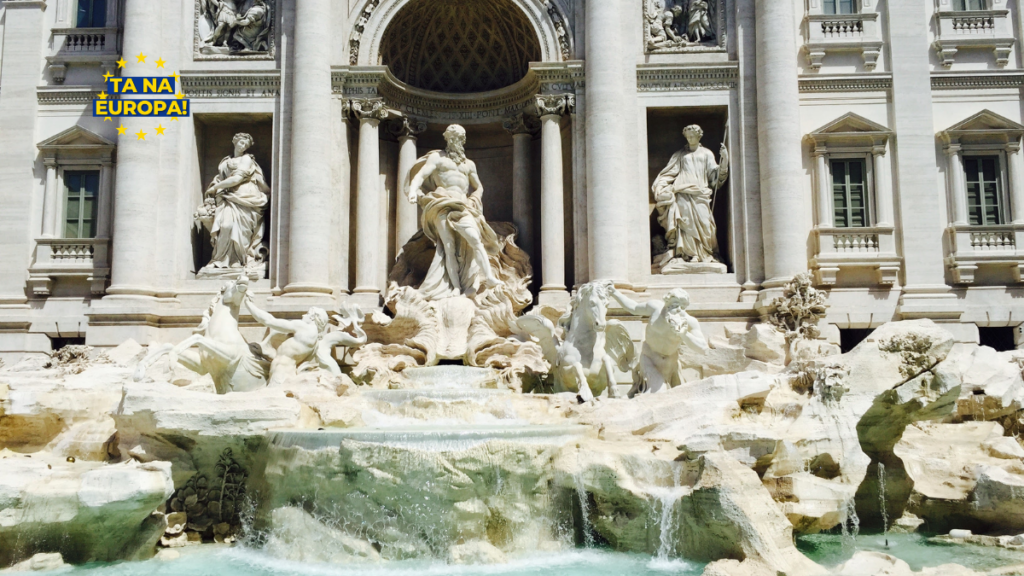
Every year, thousands of coins are collected from the water. That money is traditionally used for charitable and public purposes. However, managing crowds also requires staff, barriers, ticket systems, and monitoring.
From an economic perspective, a 2 euro controlled entry can:
- Generate predictable revenue for maintenance
- Reduce uncontrolled crowd density
- Improve visitor flow management
- Support local employment related to site supervision
When we talk about tourism in Europe, we often focus on beauty and history. But there is always an economic system behind it. Heritage sites are assets. They need funding. They need structure.
If you are interested in how European tourism models affect local economies, we have explored similar dynamics in https://tanaeuropa.com/how-tourism-impacts-european-cities/ where we analyze revenue, taxes, and infrastructure pressure in major capitals.
Overtourism in Europe and Why This Is Not an Isolated Case
Rome is not alone. Venice has already tested visitor control systems. Other cities are studying tourist taxes, day visitor charges, and time slot bookings.
Overtourism became a major discussion topic after travel rebounded strongly in recent years. Social media increases exposure. Cheap flights connect cities quickly. Remote workers travel longer and stay in central areas. All of this changes the dynamic of historic centers.
The Trevi Fountain rule is part of a broader European pattern:
- Controlled access to heritage zones
- Increased local tourism taxes
- Digital reservation systems
- Protection policies for historical infrastructure
For adults planning to move or spend long periods in Europe, these changes matter. Regulations can influence where you choose to live, how much you spend, and how easy it is to enjoy public spaces.
You can read our practical visa guide at https://tanaeuropa.com/europe-visa-guide/ to understand how different European countries structure entry and residency rules.
What This Means for Your Travel Budget in 2026
Let us think practically. If you visit Rome for three days, you will likely pay for:
- Accommodation
- Public transport
- Food
- Museum tickets
- Guided tours
- Optional experiences
Now add small controlled access fees. Two euro here. Three euro there. Tourist tax per night. Transportation surcharges.
It is not dramatic, but it changes your total cost. When planning travel in Europe, especially during high season, you must build a realistic budget.
Many travelers underestimate daily expenses. They see flight prices and hotel deals but forget micro costs. Controlled entry systems like this make budgeting more precise and less spontaneous.
If you are comparing travel costs across countries, we also analyzed salary levels and purchasing power in https://tanaeuropa.com/average-salary-in-europe-2026/ which helps you understand how locals experience these costs compared to visitors.
Preservation Versus Accessibility – A Fair Trade Off
Some people argue that cultural heritage should always remain free. Others say that controlled fees are necessary to preserve monuments.
Is 2 euro a barrier? For most international travelers, probably not. But the principle matters. When a public space becomes partially regulated, it changes the feeling of openness.
However, without control, the pressure on infrastructure increases. Stone erodes. Cleaning costs rise. Safety risks multiply. Local residents complain.
The real question is balance. Can cities protect history while keeping it accessible? Can small fees improve organization without turning culture into a fully commercial product?
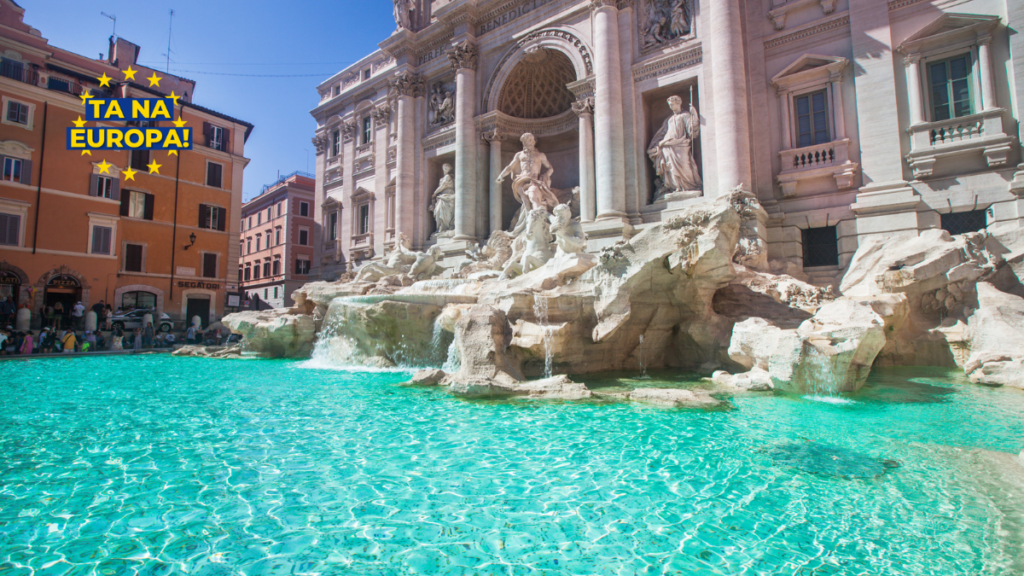
Rome seems to be testing this balance carefully. The square remains open. The fee is limited to a specific zone. The amount is relatively low. This suggests a controlled experiment rather than aggressive monetization.
Future Scenarios – Could More Attractions Follow
Once one iconic site introduces a structured access model, other cities observe closely.
If the Trevi Fountain system proves successful, we may see similar policies in:
- Other high traffic monuments
- Popular public viewpoints
- Historic bridges and narrow streets
- Small heritage towns
Tourism policy is evolving. Technology makes ticketing easier. Data allows cities to monitor flow in real time. The future of European tourism will likely include more planning and fewer fully uncontrolled experiences.
Europe will remain attractive, but spontaneous mass access to certain landmarks may become less common. If you are also exploring relocation possibilities, check our full relocation overview at https://tanaeuropa.com/relocation-guide-for-europe-2026/ to understand practical planning steps.
Conclusion of Ta Na Europa!
The 2 euro fee at the Trevi Fountain in 2026 is more than a small ticket. It represents a shift in how Europe manages tourism pressure, public space, and historical preservation.
From a visitor perspective, the impact is manageable but real. You need to plan slightly better. You need to consider micro costs. You need to understand that iconic locations now operate with rules.
From a broader perspective, this change reflects a new phase in European tourism. Cities are protecting their heritage while trying to remain open to the world.
If you plan to visit Rome in 2026, you will still see the fountain. You will still be able to throw your coin. But now, you will do it inside a structured system designed to preserve the monument for future generations.
Sources
Rome introduces Trevi Fountain access fee to curb coin-tossing crowds – https://www.reuters.com/world/rome-introduces-trevi-fountain-access-fee-curb-coin-tossing-crowds-2026-02-02/
Rome tourists have to pay to get up close to the Trevi Fountain – https://www.euronews.com/travel/2026/02/02/rome-tourists-will-have-to-pay-to-get-up-close-to-the-trevi-fountain-next-year
Rome starts charging two-euro fee for Trevi Fountain – https://www.ansa.it/english/news/lifestyle/arts/2026/02/02/rome-starts-charging-two-euro-fee-for-trevi-fountain_d4580d1d-3353-478d-96f1-2cd289f9bb7f.html
Headline characters: 55
Total article characters: 13702
