
Second Residency in Europe: Risks, Taxes and Reality

Holding two legal residencies in Europe may sound like a smart move for high mobility professionals. But is it fully legal, financially efficient, or simply expensive? In this article, I will break down what really happens when someone tries to maintain residence in two European countries at the same time, and what nobody clearly explains about taxes, visas, reporting duties, and real risks. If you move often for work, remote contracts, consulting projects, or business opportunities, this topic matters more than you think. The idea of having flexibility across borders looks attractive. But what changes in practice? What does the law actually say? And who is truly affected when authorities start checking where you really live? This is not a simple yes or no topic. It involves immigration law, tax law, and social security coordination inside the European Union. That is why it deserves a deeper look. Why Second Residency Is Becoming More Popular In recent years, Europe has seen a rise in remote workers, freelancers, founders, and consultants who are not tied to one single office. Many professionals divide their time between different countries for lifestyle reasons, family reasons, or business strategy. Some want tax efficiency. Others want a second option in case immigration rules change. Some simply do not want to depend on one country only. For EU citizens, free movement makes mobility easier. They can relocate inside the European Union without applying for traditional visas. But easier movement does not mean unlimited residency rights without consequences. For non EU citizens, the motivation can be stronger. A second residency may look like security. If one permit expires or is not renewed, there is another legal path. But this is where complexity starts. Residency is not citizenship. Residency is conditional. It normally requires physical presence, registration, and compliance with local laws. Each residence permit has its own renewal rules, minimum stay obligations, and documentation requirements. If you want a broader view of what changes when you move countries, this type of decision is also explored in more general guides about relocation, such as moving to Europe, costs, documents, and what really changes: https://en.tanaeuropa.com/moving-to-europe-costs-documents-and-what-really-changes/ Is It Actually Legal to Hold Two Residencies? Legally speaking, yes, in many cases you can hold two valid residence permits at the same time. There is no general European law that automatically forbids it. However, each country defines its own residence conditions. Some permits require you to spend a minimum number of days per year in the country. If you fail to meet that requirement, the permit can be cancelled. So even if you are legally allowed to have two residence cards, maintaining both in practice may be difficult. For EU citizens, things are different. They do not need residence permits in the same way. But tax residency still becomes relevant, and that is where most conflicts appear. Physical Presence and the 183 Day Rule Most European countries use the 183 day rule as a reference for tax residency. If you stay more than 183 days in a country within a calendar year, you are usually considered tax resident there. But even if you stay less than 183 days, you can still be treated as tax resident if your center of vital interests is in that country. This includes: If you divide your year between two countries, you might trigger tax residency in both. That is when double taxation treaties become important. Tax Conflicts: What Nobody Explains Clearly Europe has many bilateral double taxation treaties. These agreements define which country has priority to tax certain types of income when a person qualifies as resident in both states under domestic law. However, having a treaty does not eliminate obligations. It only defines how taxation should be coordinated. In practice, you may still need to file tax returns in both countries and then apply treaty tie breaker rules or tax credits. If you want a deeper explanation of how European tax systems treat foreign residents, including worldwide income and treaty protection, a complementary view appears in this article about how taxes work in Europe for foreign residents: https://en.tanaeuropa.com/how-taxes-work-in-europe-for-foreign-residents-impact-rules-and-what-changes/ For example, if you split your time between Ireland and Portugal and you earn consulting income from international clients, you may need to: The administrative burden can increase significantly. You may face: This is rarely discussed in online forums, but it is very real in practice. Social Security Coordination: One Country at a Time Many professionals focus only on income tax. But social security can be even more sensitive. Inside the European Union, social security is coordinated under EU regulations. The general principle is that a person should be subject to the legislation of only one Member State at a time. If you work in more than one EU country, special rules apply to determine which country is competent. In many cases, this depends on where you perform a substantial part of your activity or where your employer is established. This means that, as a rule, you should not be paying full social security contributions in two EU countries simultaneously for the same activity. However, if your situation is unclear, poorly structured, or not properly documented, authorities may question where contributions are due. This can create unexpected assessments, back payments, or administrative disputes. Health coverage is also linked to the country responsible for social security. Being registered as resident in two countries does not automatically give you full public healthcare rights in both. Clarifying this point before structuring dual residency is essential. It also connects directly with how healthcare systems and residency rules interact across Europe, a topic explored in more detail in discussions about healthcare for residents and expats in Europe: https://en.tanaeuropa.com/how-healthcare-works-in-europe-for-residents-and-expats-risks-and-opportunities/ Banking Transparency and Reporting Obligations European countries participate in automatic exchange of financial information. Banks report account balances and financial data to tax authorities under international transparency rules. If you declare residency in one country but your spending patterns, contracts, and income show strong ties to another, authorities may request clarification. This does not mean
Moving to Europe? The Financial Impact No One Explains

If you are planning to move to Europe, the visa is only one part of the story. The real challenge often starts before the flight ticket. Financial planning can define whether your relocation will be stable or stressful. In this article, I break down what you should prepare now, especially if you are moving from outside the EU. As someone from São Paulo, now living in Ireland, I learned that the money side of immigration is what people underestimate the most. Let us go step by step and understand what changes, who is affected, and where the real risks and opportunities are. Why Financial Planning Before Moving Matters More Than You Think Many people focus only on getting the visa approval. But approval does not mean financial safety. The first months in Europe are usually the most expensive period of the entire process. Flights, deposits, rent in advance, temporary accommodation, insurance, documentation fees and daily costs can easily go beyond what most people calculate. If you want to compare how living expenses change across countries, this overview may also help: https://tanaeuropa.com/descubra-os-10-paises-mais-baratos-para-morar-na-europa-em-2024-custos-de-aluguel-e-salarios/ If you arrive without a clear reserve, you may accept the first job offer available, even if it is below your expectations. Good planning gives you negotiation power. It also gives you time. The Real Cost of Relocation: What Most People Skip Let us break this down into practical categories. In Ireland, for example, the law limits advance rent and deposits. A landlord cannot request more than one month deposit and one month rent in advance. The same logic applies in countries like Germany, the Netherlands or Portugal, although the numbers vary. Ignoring these details creates pressure from day one. And when pressure starts early, decisions become emotional instead of strategic. Banking in Europe: What Changes When You Arrive Opening a bank account sounds simple. In practice, it can delay your first salary if you are not organized. Traditional banks usually require proof of address and identification. Digital banks can help at the beginning, but they are also subject to strict verification rules. Large transfers may trigger temporary reviews, and you must always be ready to explain the source of your funds. If you plan to work as self employed or receive income from digital platforms, you may need to evaluate whether a business account is more appropriate. Mixing personal and business transactions can create tax confusion later. Taxes and Residency: What Nobody Explains Clearly In many European countries, staying more than 183 days in a tax year can make you tax resident. However, some countries also apply additional tests based on previous years or overall presence. Becoming tax resident may mean your global income is considered for taxation, depending on local rules and double taxation agreements. This is not automatic in every situation, but it must be verified carefully. Hiring a tax advisor in the first year may look expensive, but mistakes can cost much more later. Salaries vs Real Net Income: The Hidden Gap When people compare countries, they often compare gross salary. But what really matters is net income after taxes, social contributions and mandatory insurance. Before making comparisons between countries, always use official government tax calculators and confirm current contribution rates. You can also explore practical salary simulations here: https://tanaeuropa.com/quanto-sobra-de-um-salario-de-50-mil-euros-na-irlanda-apos-impostos/ Only after that you can calculate real purchasing power. Emergency Fund: How Much Is Enough? Many experts suggest three to six months of living expenses. For immigrants, the safer range is closer to six months. Because you may face delays in documentation, slower hiring processes or unexpected housing changes. An emergency fund is not pessimism. It is strategy. If you are still deciding which country makes more financial sense, you may also read: https://tanaeuropa.com/qual-pais-da-europa-vale-mais-a-pena-para-trabalhar-em-2025/ Legal Support: When Is It Worth Paying a Lawyer? If your case involves family reunification, complex visa categories or business migration, legal guidance can reduce risk. But not every case requires a lawyer. Before paying high fees, ask yourself if your situation is straightforward and if official government guidelines are clear. Sometimes one professional consultation is enough. Currency Exchange Strategy: Timing Can Save You Money If you are converting large amounts from your home currency to euros, exchange rate volatility matters. Small percentage differences can represent significant amounts when transferring savings. Instead of sending everything at once, some people split transfers over time to reduce risk. Always check transfer limits and compliance rules in both countries to avoid temporary account restrictions. Renting vs Buying: Should You Think About Property Now? In the first year, renting is usually the safer option. Buying property requires credit history, stable employment and understanding of mortgage rules. Banks analyze income stability carefully. Without a long term contract or solid residency status, approval can be difficult. The first financial goal should be stability, not ownership. Health Insurance and Social Systems: What Is Mandatory? Some countries require private insurance before you access public healthcare. Others automatically deduct social contributions from salary. If you arrive without understanding this, you may double pay or remain uninsured during the transition. Confirm what is included in your contract and what you must arrange independently. Remote Work and Digital Income: Extra Attention Required If you plan to work remotely for a foreign company while living in Europe, verify your tax residency status, employer obligations and social security contributions. Being proactive avoids penalties and stress later. If your goal is long term stability, understanding residency pathways can also be useful: https://tanaeuropa.com/como-conseguir-residencia-permanente-na-irlanda-regras-atualizadas/ Conclusion of Ta Na Europa! Moving to Europe can be one of the best decisions of your life. But the financial angle is what separates a smooth transition from a stressful experience. Visa approval is only the beginning. Real stability comes from planning costs, taxes, banking, housing and emergency reserves with clarity. Money planning is not about being rich. It is about being prepared. For further official information and policy references, see the sources below. Tax residence rules in Ireland – https://www.revenue.ie/en/jobs-and-pensions/tax-residence/resident-for-tax-purposes.aspxSecurity deposits and tenant rights in Ireland – https://www.rtb.ie/renting/rights-responsibilities/security-depositsOpening a bank
Health Insurance for Spring Travel in Europe Guide

Spring in Europe is one of the most popular travel seasons. Flights get busy, cities get crowded, and prices slowly go up. But one detail many people ignore is health insurance. In this guide, I will explain what coverage you really need, what changes in spring, and what mistakes can cost you money. If you are planning to travel across Europe, this is something you should not skip. Why Spring Travel Increases Insurance Risks Spring looks calm. Flowers, good weather, outdoor cafés. But from a risk perspective, this season brings specific issues that many travelers do not think about. More people travel between March and June. That means more accidents in airports, more crowded transport, and longer waiting times in hospitals. It also means higher medical costs in tourist areas. Insurance companies know this. That is why premiums can change during peak periods. If you are traveling from outside the EU, understanding how the European healthcare system works is essential. I already explained part of this in another article on Ta Na Europa, where many readers were surprised by how different the system is compared to the US or Brazil: https://tanaeuropa.com/como-funciona-a-saude-na-europa-para-residentes-e-expatriados-riscos-e-oportunidades/. But what really changes in spring? What Changes During Spring in Europe Spring is not only about tourism. It is also allergy season, sports season, and festival season. If you plan to move between countries like Ireland, Spain, France and Italy in the same trip, your insurance must clearly cover medical care in all those destinations. Some low-cost policies have geographic limitations or specific territorial conditions. Many people do not read this part carefully. Who Is Most Affected by Insurance Gaps Not everyone needs the same level of coverage. The risk profile changes depending on your travel style. Backpackers and Multi-Country Travelers If you are using low-cost airlines and crossing borders often, you need: Without repatriation, costs can reach thousands of euros. And yes, this happens more often than people imagine. Digital Nomads and Remote Workers Many people combine spring travel with remote work. But standard travel insurance does not always cover work-related incidents. If you work from cafés, co-working spaces or public places, check: If you are planning to stay longer, you may need private international health insurance instead of basic travel insurance. If you want a practical checklist for travel insurance that is commonly requested for entry and short stays in Europe, including the well-known minimum coverage rule, this Ta Na Europa guide helps: https://tanaeuropa.com/seguro-obrigatorio-para-viajantes-na-europa-saiba-tudo-antes-de-embarcar/. Students and Exchange Participants Spring is also a popular semester start for exchange programs. If you are coming to Ireland, Spain or Germany for studies, your visa may require specific insurance coverage amounts. Minimum coverage limits often start at 30,000 euros for Schengen visas. Do not assume your domestic insurance works here. In many cases, it does not. What Coverage You Really Need This is where many travelers make mistakes. They buy the cheapest option. Let us break it down clearly. Minimum Medical Coverage At least 30,000 euros for Schengen compliance. But realistically, I recommend 100,000 euros or more. Hospital stays in Western Europe can become expensive very quickly, especially if private treatment is involved. Emergency Evacuation and Repatriation This is not optional. If something serious happens, transport back to your home country can cost thousands of euros, sometimes even more depending on distance and medical complexity. Multi-Country Validity Your policy must explicitly state that it covers all Schengen countries or the full EU zone, depending on your travel plan. If you plan to visit the UK, remember it is not part of the EU anymore. You need confirmation that your insurance also covers the UK. Infectious Disease Coverage Coverage rules for infectious diseases vary by insurer. Always verify what is included and what is excluded in the policy wording. Sports and Outdoor Activities Planning hiking in the Alps? Surfing in Portugal? Cycling in the Netherlands? Standard insurance often excludes higher-risk sports. Spring is peak outdoor season. If you rent bikes or scooters, liability coverage is also important. For example, in Ireland cycling accidents are common during milder months. If you want a broader and very realistic view of everyday costs and how transport and services affect your budget across countries, this Ta Na Europa article is a good complement: https://tanaeuropa.com/custo-de-vida-na-europa-o-que-esperar-entre-diferentes-paises/. Insurance Mistakes to Avoid This Spring Now the practical part. Buying Based Only on Price Cheap policies often have: You save 20 euros and risk losing thousands. Ignoring Policy Exclusions Always read: Yes, these details matter. Not Checking Duration Limits Some spring travelers extend trips. If your policy covers 30 days and you stay 45, the last 15 days may not be covered. Assuming EHIC Is Enough If you are an EU citizen, you may have a European Health Insurance Card. But EHIC: Many people misunderstand this. Costs of Health Care in Popular Spring Destinations Let us talk numbers carefully. In Ireland, the public emergency department fee without a GP referral is currently 100 euros. Private treatment can cost significantly more depending on the hospital and services provided. Across Western Europe, private hospital stays can cost hundreds or even thousands of euros depending on the country, treatment type and duration. Medical evacuation within Europe can cost thousands of euros, especially if air transport and specialized medical teams are required. So when someone says insurance is expensive at 60 or 80 euros for a short trip, we need perspective. Does Travel Insurance Affect Visa Approval Yes, in some cases. For Schengen visas, proof of insurance is mandatory. Coverage must include: If documentation is wrong, visa processing can be delayed. Insurance is not just about safety. It is about compliance. If you want to understand legal stay and how proof of valid health coverage shows up in real residency processes, this Ta Na Europa guide is a solid reference: https://tanaeuropa.com/como-funciona-a-residencia-legal-em-portugal-para-estrangeiros/. When Should You Upgrade to International Health Insurance Travel insurance works for short stays. But if: You may need a full international health insurance plan. These plans cost more, but they offer:
Applying to Universities in Europe Before Deadlines

Every year, between February and March, thousands of students start preparing their university applications across Europe. If you plan to begin your studies in September, this is the most critical moment. Missing one document or misunderstanding one requirement can delay your plans for an entire year. In this guide, I explain what you really need to prepare before spring deadlines and what many people only discover too late. Why Spring Deadlines Matter More Than You Think Spring deadlines are not just another date on the calendar. In many European countries, universities close their main intake applications between January and April for courses starting in September. In Ireland, for example, the main undergraduate deadline through the national system usually closes at the beginning of February, with a late window opening in March. In the United Kingdom, key equal consideration deadlines often happen in January. This means that waiting until March can already be risky depending on the country. If you are applying from outside the European Union, the timeline becomes even more sensitive. Visa processing, proof of funds, health insurance and accommodation arrangements all depend on early approval. Waiting until the last minute can create stress that could easily be avoided. So the question is simple. Are you ready with everything universities expect from you? Understanding the European Application System Europe does not follow one single application model. Each country has its own structure, deadlines and admission rules. Assuming that all universities follow the same pattern is one of the biggest mistakes applicants make. Different Systems Across Countries and Why It Matters In Ireland and the UK, undergraduate applications usually go through centralized platforms. In other countries such as Germany, Spain or Italy, many universities accept direct applications through their own portals. Some master programs operate on rolling admissions, while others have strict cut off dates published months in advance. Before preparing documents, you must check whether your chosen university uses: This difference changes everything. In rolling admissions, applying early can increase your chances because places may fill up gradually. In fixed systems, missing the deadline can mean waiting an entire year. Main Documents You Must Have Ready This is where many students make mistakes. They focus only on academic transcripts but forget other critical documents that can block the process. Academic Transcripts and Certificates You must prepare: In many cases, documents must be translated into English or the local language by a certified translator. Some universities may request officially certified copies. Requirements vary, so you must confirm directly with the institution. Do not wait until the last weeks before the deadline to request transcripts. Processing times at schools and universities can take several weeks. English Language Certification and Validity Rules If the program is taught in English, universities usually require proof such as IELTS or TOEFL. Minimum scores vary depending on the course and the institution. Some universities may waive the requirement if your previous education was fully in English, but this is not automatic. One important detail that many people forget is validity. Language test results are typically valid for two years. Submitting an expired certificate can result in rejection even if your academic profile is strong. Booking your exam early is essential. Test centers often become full during peak application months. Motivation Letter and CV That Make Sense Your motivation letter is more important than many students think. It is not just a summary of your resume. Universities want to understand: Keep it clear, honest and structured. Avoid complex words. Be direct and show real intention. A simple and authentic letter is usually stronger than a complicated one full of difficult vocabulary. Reference Letters and Timing Pressure Many master programs require one or two academic or professional references. Professors and employers need time to prepare letters. Asking one week before the deadline is not realistic. Plan at least one month in advance. Confirm whether references must be uploaded directly by the referee or submitted by you. Each university may follow a different system. Financial Planning: Costs, Deposits and Proof of Funds This is the part that creates the biggest surprises. Tuition Fees and Payment Structure Across Europe Tuition fees vary widely in Europe. Some countries charge low fees for EU students but significantly higher fees for international applicants. Others apply the same structure to everyone. Before applying, calculate: Many universities require a non refundable deposit after issuing an offer. If you are applying to multiple institutions, you may need to decide quickly where to commit financially. Proof of Funds for Visa Applications Non EU students must show proof that they can support themselves during their studies. The required amount depends on the country and may be updated periodically by immigration authorities. In Ireland, for example, financial requirements are clearly defined and must be proven before visa approval. This money usually must be in your bank account before the visa application. Financial documents may also need to be recent, sometimes issued within a limited timeframe. If you are not financially prepared by the time you receive your acceptance letter, you risk losing valuable time. Health Insurance Requirements and Legal Compliance Student insurance is mandatory in several European countries, especially for non EU students. Immigration authorities may require private medical insurance as a condition for granting residence permission. Check carefully: Insurance is not just a visa formality. Medical care in Europe can be expensive without coverage, and lack of proper insurance can affect your legal status. Who Is Most Affected by Late Preparation You might think you still have time. But who suffers the most from delays? Scholarship deadlines are often earlier than admission deadlines. That means you must prepare documents even earlier if you are looking for financial support. Hidden Risks and Small Details That Create Big Problems There are small details that can create serious complications. Document Expiration and Administrative Rules Some language tests expire. Financial statements may need to be recent. Passport validity may need to extend beyond your planned stay. Submitting outdated or incomplete documentation
European Tax Deadlines: What Expats Should Not Ignore

Tax season in Europe is not just another bureaucratic task. For foreign residents, it can define how much money stays in your pocket and how much goes away without you noticing. In this article, I explain what changes from country to country, who is affected, what deadlines matter most, and what you should prepare now to avoid problems later. If you live in Europe as a foreign resident, this is not something to postpone. Tax planning is not only for rich people. It is for anyone who works, earns, invests, or plans to stay legally in another country. Why Tax Season in Europe Has a Bigger Impact Than You Think Every European country has its own tax system. Some are simple. Others are complex. But there is one thing in common. Deadlines are strict. Missing a deadline can result in In countries like Ireland, Germany, Portugal, Spain, and France, tax authorities are becoming more digital and more connected. Data exchange between institutions is stronger than before, especially through European and international reporting agreements. That means mistakes are easier to detect. If you want a wider overview of how taxes affect foreigners across Europe, this related guide helps connect the bigger picture to real life decisions: https://en.tanaeuropa.com/how-taxes-work-in-europe-for-foreign-residents-impact-rules-and-what-changes/. If you are working in Ireland, for example, you may already be familiar with PAYE and the Revenue system. Your salary structure, tax credits, and social contributions directly affect how much you receive each month. Now imagine adding foreign income, investments, or freelance work to that equation. Things can become complicated very quickly. Who Is Affected and What Changes for Foreign Residents Being an expat changes your tax reality. You may face Many people think that if they already pay tax through payroll, they do not need to do anything else. That is not always true. Residency Status and Tax Obligations Your tax residency status determines what income you must declare. In most European countries, if you spend more than 183 days per year in the country, you are considered tax resident. That usually means you must declare worldwide income. This includes If you recently moved, you should understand how residency affects you from the first year. For a practical view of costs, documents, and what people usually miss in the first months, this article adds useful context: https://en.tanaeuropa.com/moving-to-europe-costs-documents-and-what-really-changes/. Ignoring tax residency rules can lead to financial corrections later. European Tax Deadlines You Must Track Carefully Deadlines vary by country, and they can change slightly each year. Early preparation is always safer. Here are general examples confirmed for the current tax cycle These timelines are based on official tax authority guidance published for the current year. Always confirm directly with the relevant national authority before filing. The risk is not only late filing. The risk is filing incorrectly because you rushed. What Documents You Should Prepare Now Do not wait until the last week. Start organizing now. You should gather If you are self employed or a freelancer, your responsibility is even higher. You may need to make advance payments during the year, depending on the country. For those working in delivery platforms, digital services, or hybrid contracts, your situation might not be as simple as it looks. Some income may not be automatically reported through payroll systems, which increases your reporting responsibility. If you are comparing work models, visas, and what changes when you work abroad, this is a good supporting read: https://en.tanaeuropa.com/working-in-europe-as-a-foreigner-rules-visas-and-opportunities/. The Hidden Costs No One Tells You About When we talk about taxes, we usually focus only on the percentage. But there are other financial impacts In many European countries, hiring a tax advisor can cost between 300 and 1500 euros depending on complexity. In complex cross border cases, costs may be higher. However, professional advice can prevent penalties and long term financial problems. Is it worth hiring one. It depends on your situation. If you have You may manage alone using official online systems. But if you have investments, property abroad, digital assets, or freelance income from another country, professional guidance becomes more relevant. Double Taxation Agreements and What Changes in Practice Europe has many double taxation treaties. But having an agreement does not mean you do nothing. You may still need to Many foreign residents assume the treaty solves everything automatically. It does not. In most cases, you must actively declare and apply the correct credit mechanism. Understanding how tax credits work can protect your income legally and efficiently. What Happens If You Ignore Tax Season Let us be direct. Ignoring tax obligations can lead to For those planning a long term life in Europe, tax compliance is part of immigration stability. If your goal is to build financial security in Europe, taxes are not optional. They are part of the strategy. Smart Planning Strategies for Foreign Residents Now let us talk about opportunities, not only risks. Tax season is also a moment to review your financial life. Ask yourself In some countries, pension contributions reduce taxable income. In others, certain health or education expenses are deductible. Some countries offer temporary tax benefits for new residents under special regimes. Planning early improves cash flow. Instead of being surprised by a tax bill, you prepare monthly. The Economic Impact Behind the Numbers Tax systems in Europe are under pressure. Governments adjust policies to respond to inflation, public spending, and demographic changes. Reporting rules continue to evolve, and financial transparency between countries has increased significantly in recent years. For foreign residents, this may mean This is not about fear. It is about awareness and preparation. What No One Tells You About Refund Expectations Many people look forward to tax refunds. But refunds are not free money. They usually mean you overpaid during the year. Would you rather give the government an interest free loan, or manage your cash better each month. Understanding your tax profile helps you adjust payroll credits and avoid overpaying. This is especially relevant for young professionals building savings in Europe. If you are comparing countries,
St. Patrick’s Day in Ireland: Real Costs Guide

St. Patrick’s Day in Ireland looks magical online, but the real question is simple: how much money do you actually need? In this guide, I break down hotel prices, daily expenses, transport, exchange rates and smart banking tips so you can plan your budget with clarity and avoid financial surprises. Every year in March, Ireland turns green. Streets are full, hotels sell out, flights increase and restaurants raise prices. If you want a quick cultural context before focusing on money, this related piece can help you understand what the week looks like on the ground: https://tanaeuropa.com/st-patricks-day-2025-tradicao-irlandesa-e-a-participacao-brasileira-nas-comemoracoes/. If you are planning to visit Dublin or any other Irish city during St. Patrick’s Week, understanding the financial impact before you book is essential. I live in Ireland, and I see this movement every year. Prices change fast. Availability disappears quickly. And many travelers underestimate the real cost of being here during this period. Let’s break everything down step by step. The Real Impact of St. Patrick’s Week on Prices St. Patrick’s Day is celebrated on March 17, but the economic impact usually starts at least five to seven days before. Dublin, in particular, becomes a high demand market. Demand increases in three main areas: When demand rises sharply in a short period, prices follow the same direction. This is basic market logic. If you are comparing a random week in February with St. Patrick’s Week, you will clearly notice the difference. Why Hotels Become So Expensive in Dublin Dublin has a limited hotel supply compared to major European capitals. During large events, this becomes very visible. Average hotel prices in a normal low season period: During St. Patrick’s Week: Central locations close to Temple Bar or O’Connell Street can go even higher. Many visitors ask if it is worth staying in the city center. Financially, not always. You can consider areas connected by Luas or Dart train lines and reduce accommodation costs significantly. If you want to understand more about living costs in Ireland, it also helps to compare Ireland with cheaper European options to see why Dublin gets painful during peak weeks: https://tanaeuropa.com/descubra-os-10-paises-mais-baratos-para-morar-na-europa-em-2024-custos-de-aluguel-e-salarios/. Hidden Accommodation Costs Nobody Talks About The price per night is not the final price. You also need to consider: When you calculate your budget, always add at least 10 to 15 percent buffer. Travel insurance is another important factor. During peak events, medical services and travel disruptions are more common. Insurance prices depend on your country of origin, but for European travelers it usually ranges between 15 and 40 euro for a short trip. Daily Expenses: How Much Do You Spend Per Day? Now let’s talk about daily spending. In Dublin during St. Patrick’s Week, average daily expenses per person can look like this: A realistic daily budget is between 70 and 120 euro per person, excluding accommodation. If you attend multiple events and drink more in pubs, this number can easily pass 150 euro per day. Many visitors underestimate pub prices. A simple night out in Temple Bar can cost more than expected. If you are not careful, one evening can equal one extra hotel night. Transport Costs: Airport, City and Regional Travel Transport also changes during this period. From Dublin Airport to city center: Inside the city: If you plan to explore beyond Dublin, such as Galway or Cork, train prices can increase close to the event date. Booking early makes a real difference. If you are thinking long term about moving to Ireland and understanding salary versus cost of living, check related financial breakdowns on the Ireland section of Ta Na Europa to compare travel expenses with real monthly budgets. Exchange Rates and Digital Banking Strategy Now comes a key financial point many travelers ignore: exchange rate and banking fees. If you are coming from outside the euro zone, your final cost depends on: Traditional banks often charge foreign transaction fees that can range around 1.75 to 3.5 percent depending on the bank, plus possible fixed ATM withdrawal fees Digital banks usually offer: When spending 1,000 euro during the week, a 3 percent fee means 30 euro lost only in banking cost. That is almost half a day of food budget. Planning your banking strategy before traveling is part of smart financial planning. If you are still setting up accounts and do not want last-minute surprises with documents or address proof, this guide is useful before you travel: https://en.tanaeuropa.com/opening-a-bank-account-in-europe-what-foreigners-need-to-know/. Budget Plan: How Much Money Do You Really Need? Let’s create a simple example for a four day trip to Dublin during St. Patrick’s Week. Scenario: Calculation: Estimated total: 1,540 euro Adding 10 percent safety margin: around 1,700 euro total. For couples, you divide accommodation cost, which improves the math significantly. This is why planning ahead changes everything. To keep your budget realistic, it helps to anchor your numbers to what people actually earn in Ireland today, especially if you are mixing tourism with job searching or a longer stay: https://tanaeuropa.com/salario-minimo-na-irlanda-chega-a-e2-45267-por-mes-em-2026-com-nova-regra/. Is It Worth It Financially? Now the honest question. Is it financially worth visiting Ireland during St. Patrick’s Week? From a pure cost perspective, it is one of the most expensive weeks of the year. From an experience perspective, it is unique. If your goal is to see Ireland with lower costs, consider: If your goal is cultural immersion and you accept higher prices, then budgeting correctly is the key. Many people only look at the flight ticket price. But the real impact is inside the country. Risks and Opportunities: What Nobody Tells You High demand creates both risk and opportunity. Risks: Opportunities: Ireland is not only Dublin. Smaller cities can offer strong cultural experiences with lower cost pressure. If you want to understand more about financial planning for living or traveling in Europe, and how costs change when you go beyond a short trip, this broader overview gives a clear baseline: https://en.tanaeuropa.com/moving-to-europe-costs-documents-and-what-really-changes/. Future Outlook: Will Prices Keep Increasing? Tourism demand in Ireland continues to grow year after year. Large events like St.
The True Cost of Banking in Europe Exposed

Europe looks financially stable and transparent on the surface. But if you already live here and use a local bank account, you may be paying more than you think. This article breaks down the real cost of banking in Europe, focusing on currency spread, transfer margins, account maintenance fees and compliance costs that rarely appear clearly on your statement. If you send money abroad, receive salary in euros, or move funds between countries, small percentages can turn into large losses over time. Let us go step by step and uncover what most foreigners do not notice. Understanding banking costs is even more important when combined with overall living expenses across the continent, especially in countries with rising housing and utility costs. A broader financial perspective can be seen in https://en.tanaeuropa.com/cost-of-living-in-europe-2026-guide/, where structural monthly expenses show how small recurring values accumulate over time. Why Banking in Europe Feels Cheap But Is Not SEPA transfers are often advertised as free, especially inside the euro area, because regulation requires that banks charge the same price as a domestic euro transfer. However, this does not automatically mean zero cost in every situation. The cost is frequently embedded inside exchange rates, processing margins or indirect charges. When banks advertise no transfer fee, they usually recover money through currency spread or intermediary routing costs. The real issue is not one single fee. It is the combination of small hidden charges repeated every month. Currency Spread: The Silent Percentage That Hurts When you exchange money, you rarely receive the interbank rate. The interbank rate is the rate banks use between themselves. What you receive is a marked up rate. That difference is called currency spread. What Is the Real Spread in Practice? In Europe, traditional banks often apply a spread between 1.5 percent and 4 percent. Some digital platforms reduce it to 0.3 to 1 percent. But even 1 percent becomes significant over time. Example scenario: Multiply this by monthly remittances and annual travel. Over one year, that silent margin may exceed your visible account fees. Salary structure also plays a role. In countries like Ireland, even a small percentage loss impacts real income over time. You can see current wage references in https://en.tanaeuropa.com/minimum-wage-ireland-2026-update/ and compare how margins reduce purchasing power. Why Most Residents Do Not Notice It Banks display the final amount you receive, not the interbank comparison. The spread is embedded in the rate shown. Unless you check financial data platforms in real time, you do not see the difference. For residents sending money outside the eurozone, this becomes even more relevant. If you are transferring funds back home or investing abroad, you may lose more through spread than through visible transfer fees. Transfer Margins: More Than Just a Fee Line Many residents focus only on the visible transfer fee. But banks use different pricing layers. Visible Transfer Fees These are straightforward charges. Example: These fees are easy to calculate. Embedded Transfer Margins What is less visible is routing margin. When money moves outside SEPA, correspondent banks may deduct fees during processing. The sender often does not know in advance the final amount the recipient will receive. In some cases, 15 to 30 EUR disappear across intermediary banks. If you manage cross border income, freelance payments or remote contracts, the real cost is not the flat fee. It is the combination of: Residents planning long term stability should combine banking efficiency with structured financial planning. Broader expat financial strategies are discussed in https://en.tanaeuropa.com/financial-planning-for-expats-europe/, showing how operational costs affect wealth accumulation. Account Maintenance Fees: The Monthly Drain Some European banks advertise free accounts. Others charge between 5 and 15 EUR per month. At first glance, 10 EUR monthly does not look dramatic. But over five years, that becomes 600 EUR. And this does not include: When comparing financial decisions, it is useful to analyze different countries and their economic structure. For example, cost comparison studies such as https://en.tanaeuropa.com/descubra-os-10-paises-mais-baratos-para-morar-na-europa-em-2024-custos-de-aluguel-e-salarios/ help illustrate how banking costs interact with rent and salary realities. Premium Accounts and Hidden Bundles Certain banks bundle insurance, travel perks or credit benefits into premium plans. These cost between 15 and 30 EUR per month. If you rarely use those services, the effective cost per usage becomes very high. Before upgrading, calculate: The difference often surprises residents who thought they were getting a good deal. Compliance Costs and Regulatory Impact Europe has strict anti money laundering rules and reporting obligations. Banks invest heavily in compliance teams, monitoring systems and identity verification tools. Although you do not see a direct line called compliance fee, operational costs are integrated into pricing models. You may notice: Banks justify this as regulatory necessity. The cost, however, is transferred indirectly to clients. Comparing Traditional Banks vs Digital Banks Digital banks often reduce overhead, but not all costs disappear. Traditional banks typically have: Digital banks typically offer: However, digital platforms may charge higher weekend exchange margins or premium subscription tiers. The key is not choosing the cheapest looking option. It is calculating total annual cost. Who Is Most Affected by Hidden Banking Costs? Residents with active international movement are the most exposed. This includes: If you are building savings while living abroad, banking efficiency becomes part of your financial strategy. The Real Annual Cost Calculation Let us simulate a realistic resident scenario. Assumptions: Currency spread annual loss:2,000 x 2 percent = 40 EUR per transfer40 x 12 = 480 EUR Maintenance fee annual:10 x 12 = 120 EUR Visible transfer fees estimate:5 x 12 = 60 EUR Total annual cost: 660 EUR Over five years, this becomes 3,300 EUR. That amount could fund education, emergency savings or part of an investment portfolio. Long Term Impact on Financial Stability Hidden banking costs do not feel urgent. But over years, they affect: If you aim to stay in Europe long term, understanding these mechanisms is not optional. Small percentages applied repeatedly create real structural differences in wealth accumulation. Conclusion of Ta Na Europa! Banking in Europe is safe and regulated, but not automatically
Cross-Border Healthcare in Europe: Risks and Real Costs

Getting sick outside your country of residence in Europe can quickly turn from a small health issue into a legal and financial question. In this article, I explain what really happens if you need medical care in another European country, how public systems interact, where EHIC or GHIC applies, and where private insurance becomes essential. If you live in one country and travel often to another, or if you move between countries for work, this topic is more important than most people think. The rules are not always simple. And what looks like full coverage on paper may leave gaps in real life. Why Cross-Border Healthcare Is More Complex Than It Looks Europe promotes free movement. You can travel, study, and work across borders with fewer barriers than almost anywhere else in the world. But healthcare is still managed at national level. Each country has its own public health system, its own reimbursement model, and its own administrative rules. That means your right to access care abroad depends on your residency status, your employment status, and how you are insured. Are you a tourist? A resident? A posted worker? A digital professional splitting time between two countries? Each scenario changes the outcome. If you want a broader, practical view of how public and private healthcare really works for residents and expats across Europe, this guide can help: https://en.tanaeuropa.com/how-healthcare-works-in-europe-for-residents-and-expats-risks-and-opportunities/. EHIC and GHIC: What They Really Cover and What They Do Not The European Health Insurance Card, known as EHIC, allows access to medically necessary public healthcare during temporary stays in another EU or EEA country and Switzerland. The United Kingdom now issues the GHIC, which works in a similar way for many European destinations. But here is what many people do not fully understand: EHIC or GHIC does not mean free healthcare everywhere. It means you can access the public system under the same conditions as local residents. If locals pay co-payments, you pay too. If the system requires upfront payment with later reimbursement, that may be your process as well. EHIC does not cover: So if you break a leg while skiing in Austria or need emergency surgery in Spain, the public hospital may treat you. But transport back home, private room upgrades, or certain specialist fees may not be covered. If your life includes frequent trips, Schengen entries, or longer stays, this article about mandatory travel insurance in Europe gives a clear overview of what is usually required and what is often ignored until it is too late: https://tanaeuropa.com/seguro-obrigatorio-para-viajantes-na-europa-saiba-tudo-antes-de-embarcar/. What Happens If You Are a Resident in Another EU Country If you live in Ireland but travel to Germany and need urgent care, EHIC usually applies for temporary stays. However, if you are officially resident in Ireland and insured under the Irish system, your primary coverage remains there. If you are someone who spends several months per year in two countries, things become more technical. Under EU coordination rules, you should normally be insured in only one member state at a time, usually where you work. For example: These distinctions affect waiting lists, reimbursement, and long term care rights. In some cases, form S1 can be used to register healthcare rights in a country different from the one paying your contributions. If you are still in the planning stage of moving countries, costs, documents, and the reality of what changes day to day, this overview is useful context: https://tanaeuropa.com/morar-na-europa-custos-documentos-e-o-que-realmente-muda/. Private Insurance: Where the Real Gaps Appear Public systems in Europe are strong, but cross-border scenarios expose their limits. Private health insurance becomes relevant in three main situations: Many people assume their local private insurance automatically covers them everywhere in Europe. That is not always true. Some policies limit coverage to the country of residence, with only short travel emergency benefits abroad. If you are building a life across borders, combining public entitlement with international private coverage may be safer. It is also important to compare deductibles, annual limits, and exclusions related to pre-existing conditions. A common mistake is to focus only on premiums and forget the broader cost-of-living equation. This list of some of the cheapest European countries to live in is useful to compare rent, salaries, and the hidden costs that can also include health insurance: https://tanaeuropa.com/descubra-os-10-paises-mais-baratos-para-morar-na-europa-em-2024-custos-de-aluguel-e-salarios/. Planned Treatment Abroad: Is It Allowed? Many people ask: can I choose to have surgery in another EU country because the waiting list is shorter? The answer is yes, but under conditions. EU Directive 2011/24/EU allows patients to seek planned treatment in another member state and request reimbursement from their home system. However: This means that if surgery costs 10,000 euros abroad but your home system would normally pay 6,000 euros, you may only receive 6,000 back. So is it worth it? That depends on urgency, personal finances, and insurance support. Emergency Scenarios: What If Things Go Wrong? Imagine you are living in Ireland, traveling to Italy, and you have a serious accident. The public hospital will treat you under EHIC conditions. But what about aftercare? What about physiotherapy once you return home? Continuity of care can become complicated. Medical reports may need translation. Prescriptions may not be directly transferable. Follow-up appointments may restart under your home system rules. If you are frequently mobile, keeping digital copies of your medical records and understanding reimbursement timelines can save stress and money. Who Is Most Exposed to Risk? Some groups face higher exposure to cross-border healthcare gaps: If you are in one of these categories, reviewing your insurance structure is not optional. It is strategic. Costs, Waiting Lists, and Real Financial Impact Cross-border healthcare is not only a legal topic. It is financial. Waiting times vary widely between countries. Co-payment systems differ. Prescription pricing is not standardized. For example: These differences can influence where people choose to live, especially professionals planning long term relocation in Europe. Understanding these factors also makes this topic highly relevant for insurers. Policies that clearly define geographic coverage and cross-border benefits have strong commercial value. Taxes also
Fastest Permanent Residency Routes in Europe Explained

If you plan to live long term in Europe, the real question is not how to get a visa. The real question is how fast you can secure permanent residency. In this article, I compare countries based on legal time to status, requirements, risks, and practical strategy. This is about optimizing time, not just entering Europe. Many people focus only on getting approved for a temporary visa. But temporary status keeps you dependent on renewals, income rules, and immigration checks. Permanent residency changes the game. It gives stability, access to broader rights, and in some countries, a future path to citizenship. So which European countries offer the fastest legal route to permanent residency? And what are the trade offs? Let us break it down strategically. Why Time to Permanent Residency Matters More Than Visa Type A work visa can look attractive. A student visa may seem easier. A digital nomad visa sounds flexible. But none of that matters if the time required for permanent residency is long or uncertain. Permanent residency usually means: If your goal is long term life in Europe, your focus should be on the clock. When does it start? What interrupts it? What resets it? Many people do not realize that some countries pause or reset the residency clock depending on visa category. That mistake can cost years. https://en.tanaeuropa.com/residency-vs-citizenship-in-europe-whats-the-difference-and-what-matters-most/ If you want deeper context about living legally in Europe, you may also explore our related guides on living legally across European countries, where I explain the broader immigration structure in more detail. Portugal Five Year Route With Flexible Entry Portugal is one of the most well known countries for a five year permanent residency pathway. Legal timeline: What makes Portugal attractive is that several visa types count toward the five year clock, including work visas and certain residency permits. However, there are practical details people ignore. You must maintain legal residence without long absences. Tax residency may also apply depending on your situation. https://en.tanaeuropa.com/how-taxes-work-in-europe-for-foreign-residents-impact-rules-and-what-changes/ And processing times for renewals can delay documentation even if your time legally counts. Is it fast? Five years is average in Europe. But Portugal offers relatively accessible entry pathways compared to stricter countries. For financial planning related to living costs in Europe, you can also check our detailed cost of living guides available on the website. Spain Five Years But With Strict Physical Presence Rules Spain also offers permanent residency after five years of legal and continuous residence. But there is a key detail. Spain applies strict physical presence rules. Long absences can break continuity. In some cases, time spent under certain visa categories may not count fully. The advantage is that Spain has multiple entry routes, including work, self employed, and certain residency permits. The risk is documentation. Spain can be strict with renewals, proof of income, and compliance. If your strategy is speed, Spain is not faster than Portugal. It is similar. But enforcement intensity may be higher. Ireland Five Years But Category Matters Since I live in Ireland, I always analyze it carefully. Ireland offers long term residency after five years of legal residence under qualifying stamps. However, not all immigration stamps count equally. Stamp 1 and Stamp 4 generally count. Stamp 2 student time often does not count fully toward long term residency. https://tanaeuropa.com/tipos-de-visto-para-morar-na-irlanda-qual-escolher-em-cada-situacao/ This is where many people lose time. Someone studies for three years thinking they are building toward permanent status. But only part of that time may qualify. If your strategy is speed, Ireland can work well if you enter directly with employment based permission. For more details on living in Ireland, you can also explore our full Ireland living guide available on the website. Germany Often Five Years But With Strong Integration Rules Germany typically requires around five years for a standard permanent settlement permit. However, there are accelerated pathways in specific cases, especially for highly skilled professionals and certain EU Blue Card holders who meet language and contribution requirements earlier. Integration requirements are structured: The advantage is predictability. If you meet the criteria, the system is clear. If documentation or income continuity is weak, delays can happen. Italy Five Years Under EU Long Term Rules Italy is often misunderstood when it comes to permanent residency timelines. Under the standard EU long term resident framework, Italy generally requires five years of legal and continuous residence for non EU nationals to apply for long term residence status. The confusion usually comes from citizenship rules, which can require a much longer period of residence. That is a separate process. From a pure permanent residency perspective, Italy is not slower in years compared to Portugal, Spain, or Germany. However, documentation requirements, income thresholds, and administrative processing times can influence how smooth the process feels in practice. So Italy is not legally slower in time, but it may feel slower depending on your situation. Malta Five Years With Different Pathways Malta offers permanent residence under standard long term residence rules after five years of legal stay. In addition, Malta has separate residency by investment programs, which involve higher financial commitments and are not the same as the standard long term residence route. So when analyzing Malta, it is important to separate the classic five year residence path from investment based residency schemes. Nordic Countries Often Five Years But High Compliance Countries like Sweden and Finland generally operate around five years as a reference point for permanent residence. However, recent regulatory adjustments in Finland introduced stricter qualification pathways. In practice, this means that beyond time, applicants may need to meet income thresholds, employment continuity, or language benchmarks more explicitly than before. They are not necessarily slower in years, but they can be more demanding in compliance and documentation. The Real Fastest Routes Under Five Years Now comes the strategic part. Most standard permanent residency pathways in Europe require five years. So how do some people achieve status faster? There are three main scenarios: For example, in some EU Blue Card systems, permanent residency may be possible in
Trevi Fountain 2 Euro Fee and 2026 Visitor Impact Rules
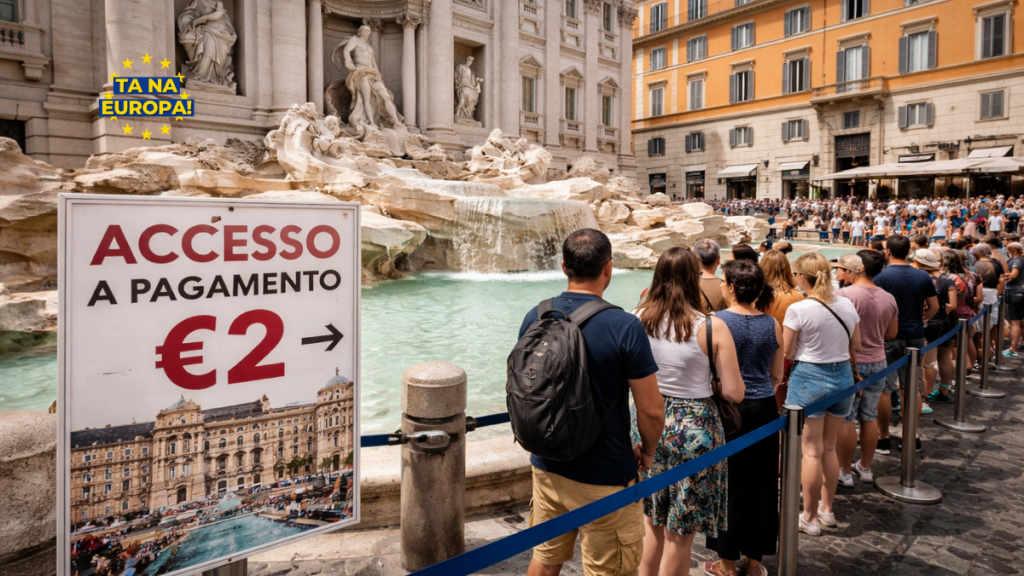
Rome introduced a 2 euro ticket for visitors who want close access to the Trevi Fountain basin on 2 February 2026. What looks like a small fee is part of a bigger change in how European cities manage tourism, public space, and cultural heritage. In this article, I explain what is happening, who is affected, how it impacts travel plans, and what this means for the future of tourism in Europe. I live in Ireland but I am originally from Sao Paulo. I am not a native English speaker, and I prefer to explain things in a simple and direct way. When I saw this news, I realized it is not just about 2 euro. It is about rules, costs, crowd control, and how cities are adapting to mass tourism. If you are planning to visit Italy, or if you are thinking about living or studying in Europe, this change matters more than it seems at first glance. Why Rome Introduced the 2 Euro Access Fee Rome receives millions of visitors every year. The Trevi Fountain is one of the most famous landmarks in the city. The tradition of throwing a coin into the fountain is known all over the world. Many people believe that if you throw a coin, you will return to Rome one day. Because of this tradition, the area is always crowded. The city government introduced a controlled access system to reduce overcrowding at the lower platform, the area closest to the water. The main square remains free. Anyone can still see the fountain without paying. However, if you want to go down to the basin level and toss a coin from the traditional spot, you need to buy a ticket during regulated hours, which currently run from 11:30 to 22:00 on Monday and Friday, and from 09:00 to 22:00 on the other days of the week. This decision is not only about money. It is about safety, preservation, and organization. When too many people gather in a small space, there is risk of accidents, damage to historical structures, and stress for local residents. European cities are under pressure to balance tourism income with quality of life. Who Is Affected and What Changes for Visitors The new rule mainly affects non residents who want close access to the fountain during controlled hours. The fee is 2 euro per person. Children under six and specific groups such as people with disabilities may be exempt according to municipal rules. If you only want to take photos from the square, you do not need to pay. The monument remains visible and accessible from public space. The ticket is specifically for the lower access area. This creates two types of experiences: At first, 2 euro seems insignificant. But think about families of four or five people. Think about travelers who visit multiple attractions in the same day. Small fees add up quickly. When you combine museum tickets, transport, food, and accommodation, every extra cost influences your travel budget. If you are researching travel costs in Europe, you may also want to read our detailed breakdown of living and visiting expenses in https://tanaeuropa.com/cost-of-living-in-europe/ where we compare daily expenses and hidden costs that many tourists forget to calculate. The Economic Logic Behind the Decision Cities like Rome invest heavily in cleaning, restoration, and security around historical sites. The Trevi Fountain is not only a tourist attraction. It is a heritage monument that requires constant maintenance. Every year, thousands of coins are collected from the water. That money is traditionally used for charitable and public purposes. However, managing crowds also requires staff, barriers, ticket systems, and monitoring. From an economic perspective, a 2 euro controlled entry can: When we talk about tourism in Europe, we often focus on beauty and history. But there is always an economic system behind it. Heritage sites are assets. They need funding. They need structure. If you are interested in how European tourism models affect local economies, we have explored similar dynamics in https://tanaeuropa.com/how-tourism-impacts-european-cities/ where we analyze revenue, taxes, and infrastructure pressure in major capitals. Overtourism in Europe and Why This Is Not an Isolated Case Rome is not alone. Venice has already tested visitor control systems. Other cities are studying tourist taxes, day visitor charges, and time slot bookings. Overtourism became a major discussion topic after travel rebounded strongly in recent years. Social media increases exposure. Cheap flights connect cities quickly. Remote workers travel longer and stay in central areas. All of this changes the dynamic of historic centers. The Trevi Fountain rule is part of a broader European pattern: For adults planning to move or spend long periods in Europe, these changes matter. Regulations can influence where you choose to live, how much you spend, and how easy it is to enjoy public spaces. You can read our practical visa guide at https://tanaeuropa.com/europe-visa-guide/ to understand how different European countries structure entry and residency rules. What This Means for Your Travel Budget in 2026 Let us think practically. If you visit Rome for three days, you will likely pay for: Now add small controlled access fees. Two euro here. Three euro there. Tourist tax per night. Transportation surcharges. It is not dramatic, but it changes your total cost. When planning travel in Europe, especially during high season, you must build a realistic budget. Many travelers underestimate daily expenses. They see flight prices and hotel deals but forget micro costs. Controlled entry systems like this make budgeting more precise and less spontaneous. If you are comparing travel costs across countries, we also analyzed salary levels and purchasing power in https://tanaeuropa.com/average-salary-in-europe-2026/ which helps you understand how locals experience these costs compared to visitors. Preservation Versus Accessibility – A Fair Trade Off Some people argue that cultural heritage should always remain free. Others say that controlled fees are necessary to preserve monuments. Is 2 euro a barrier? For most international travelers, probably not. But the principle matters. When a public space becomes partially regulated, it changes the feeling of