
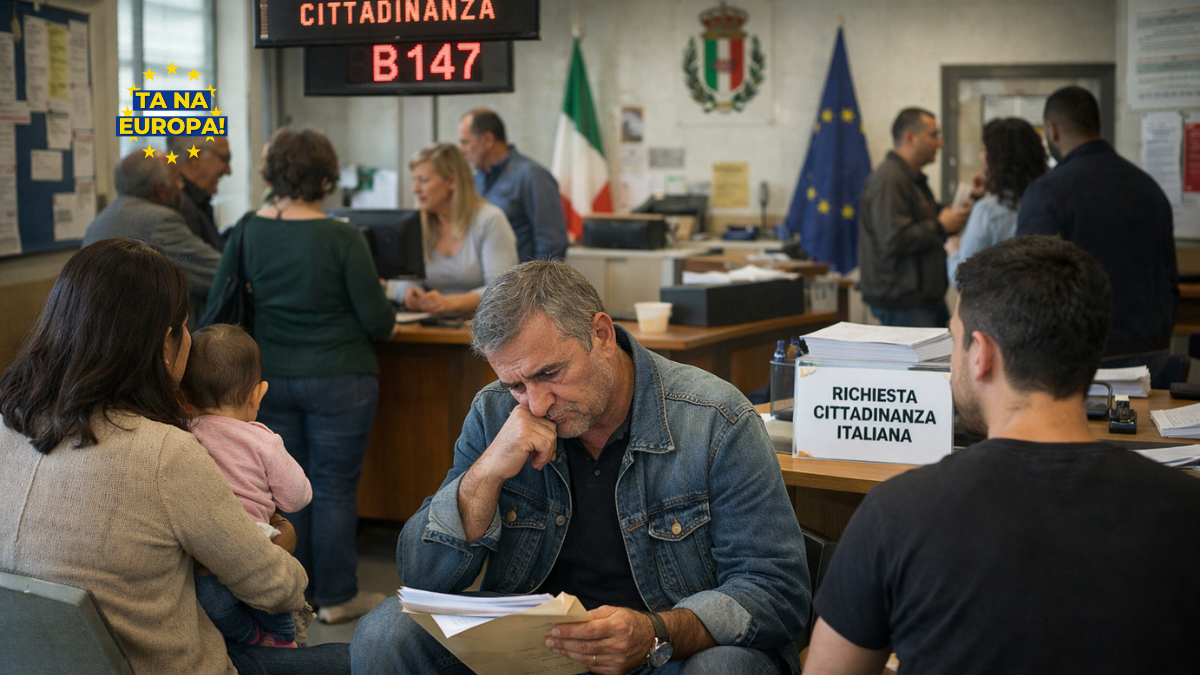
2026 is shaping up to be one of the most strategic years for those thinking about Italian citizenship. After a difficult 2025, marked by stricter rules, delays and legal pressure, the system is entering a moment of rebalancing that may change how, when and for whom the process makes sense.
The topic of Italian citizenship has never been so sensitive. For many years, the process followed a predictable rhythm. Documents, long waiting times, bureaucracy, but also legal stability. That scenario started to change fast in 2024 and reached its peak in 2025.
Now, 2026 appears as a turning point. Not because the rules became easier, but because the system itself is being forced to reorganize. Understanding what is really changing is key to making smart decisions.
This broader shift has already been reflected in recent discussions about European mobility and nationality trends, especially among people comparing different countries before choosing a legal path.

https://tanaeuropa.com/category/paises/
This article explains the context, the causes behind the changes, who is affected, what may happen next and why acting with strategy matters more than ever.
What Changed in the Italian Citizenship Process
The Italian government spent the last years trying to control the volume of citizenship requests, especially those based on ancestry. The pressure came from inside the system itself. Courts overloaded. Consulates without capacity. Municipal offices dealing with thousands of applications at the same time.
In 2025, new administrative practices became more rigid. Requirements started to be interpreted in a stricter way. Processes that used to be accepted were suddenly questioned.
This tightening has been widely discussed, particularly regarding the direct impact on Brazilians and other non European descendants who traditionally relied on Italian ancestry.
https://tanaeuropa.com/italia-restringe-cidadania-por-descendencia-afetando-brasileiros/
This did not mean the process became impossible, but it did become more technical and less tolerant to mistakes.
Why Procedures Became More Technical
The main goal was control. Authorities wanted to reduce errors, fraud and repetitive lawsuits. The side effect was a slower and more complex process.
Small details gained weight. Translations, dates, name variations and document consistency became decisive. What was once treated as a minor adjustment started to generate refusals or long delays.
For applicants comparing Italy with other European citizenship routes, this level of scrutiny has become a relevant factor when choosing where and how to apply.
The Role of Judicial Pressure
Courts in Italy became a key player. Many applicants turned to legal action after facing delays or denials. This created an additional layer of stress for the system and forced the government to react.
By the end of 2025, legal disputes were no longer isolated cases. They became part of the discussion about how citizenship should be handled going forward.
Why 2026 Is Being Seen as a Strategic Year
2026 is not about easier rules. It is about predictability.
After a year of tension, the system is seeking balance. A constitutional review expected in early 2026 may clarify the limits of recent interpretations. This does not guarantee approval, but it creates something very valuable: legal direction.
For applicants, clarity is often more important than speed.
The Importance of Legal Definition
When courts define boundaries, public offices tend to align their procedures. That reduces arbitrary decisions and gives applicants a clearer path to follow.
For those who prepare correctly, this environment can be safer than a chaotic system with constant changes.
Why Waiting Can Be Risky
Many people believe waiting is the safest choice. In reality, waiting often means entering the system later, when demand is higher again.
If the system stabilizes in 2026, a new wave of applications is expected. More demand usually means longer queues and stricter internal checks.
Timing is not about rushing. It is about avoiding unnecessary congestion.
Who Is Most Affected by These Changes
The impact is not the same for everyone. Some profiles face more challenges than others.
Descendants with Complex Family Lines
Applicants with long family chains, missing records or inconsistencies are the most exposed. In 2026, these cases will require extra preparation.
Correct documentation is no longer optional. It is the foundation of the process.
Applicants Starting From Scratch
Those who have not started yet may benefit from a more structured system, as long as they prepare well. Starting correctly matters more than starting fast.
This is particularly relevant for people who are still evaluating whether European citizenship is the right path or if other residency options make more sense financially and legally.
People Reopening Old Processes
Some applicants paused their cases in 2025 due to uncertainty. For them, 2026 may offer a safer moment to resume, with clearer expectations.
Costs, Documentation and Hidden Factors
Italian citizenship has always involved costs. In 2026, those costs are becoming more visible.
Documentation Costs
Translations, certificates, legal reviews and administrative fees add up quickly. Errors are expensive, not only in money, but also in time.
Preparing everything correctly from the start reduces the risk of paying twice.
Legal and Administrative Expenses
With the system under pressure, legal support became more common. Even those not going to court often rely on professional review to avoid mistakes.
This is not about luxury. It is about risk management.
Time as a Hidden Cost
Delays mean postponed plans. Work, mobility, family decisions and even tax planning can be affected by long waiting times.
Time has value, and 2026 may offer better control over it.
Risks and Opportunities in 2026
Every transition period carries risks. But it also creates opportunities.
The Risk of Overconfidence
Some applicants believe that legal review automatically means approval. That is a mistake. The process remains technical and demanding.
Preparation remains the key factor.
The Opportunity of a More Predictable System
For those who act with strategy, 2026 may offer fewer surprises. Clearer rules allow better planning and realistic expectations.
Comparing With Other European Paths
Many people compare Italian citizenship with other European options. Each country has its own logic, costs and timelines.

Italy remains attractive because of ancestry rights, but only for those who respect the process and its limits.
What No One Tells You About Acting Now
The biggest mistake is thinking only in terms of approval or denial. The real question is quality of process.
Starting or resuming in 2026 should be a decision based on preparation, not emotion.
Good documentation, correct translations and a clear strategy make a real difference. The system is less forgiving, but also more structured.
Those who understand this shift tend to face fewer obstacles.
Possible Scenarios for the Coming Years
Looking ahead, three scenarios are realistic.
Stabilization With High Demand
If legal clarity is confirmed, demand will grow. Waiting times may increase again, but with fewer surprises.
Further Technical Tightening
If the system feels overloaded again, procedures may become even more detailed. This reinforces the importance of early action.
Gradual Digital and Administrative Reform
Italy has been slowly modernizing its public services. Digital tools may improve transparency, but not eliminate bureaucracy.
Italian citizenship in 2026 is not about shortcuts. It is about timing, preparation and understanding the system as it is today.
After a turbulent period, the process is moving toward definition. That creates risks for the unprepared, but opportunities for those who act with clarity and strategy.
For many, 2026 may be the moment where planning matters more than speed, and precision matters more than hope.
Italy tightens citizenship by descent rules amid legal challenges
https://www.dw.com/en/italy-citizenship-by-descent-reform/a-69123487
Cittadinanza italiana, convertito il DL 36/2025. Le novità principali
https://www.integrazionemigranti.gov.it/it-it/Ricerca-news/Dettaglio-news/id/4285/Cittadinanza-italiana-convertito-il-DL-362025-Le-novita-principali
Italian citizenship reform faces constitutional review in 2026
https://www.boccadutri.com/it/corte-costituzionale-2026-cittadinanza-iure-sanguinis/
